
8/11/11
7/28/11
small thing and pressured trout

how many times you see trout rise everywhere on the surface and yet deliberately and carefully ignore the fly you have eagerly offered? many many times here! trout said "sorry, wrong fly again!" usually a very small thing and very often is almost invisible to the frustrated angler: that a blunt big meaty offer often put the feeding activities off. They only want to eat certain thing, and focus on this very image. It has been called "search image" feeding strategy in trout. why? if you have better food items (bigger and meatier) why ignore them? Most of the books will tell you that if fish are "lock in" some pre-request image, it will reduce the research effort even though ignore the nutritional rich item could be even more "costly". Search image strategy has been applied successfully in many predator and prey interaction. see LINK http://en.wikipedia.org/wiki/Prey_detection.
However, for trout feeding specifically on certain insect type or certain stage of life cycle in insects(larva, pupa, emerger etc...). Should we call this behavior is the exercise of the search image feeding behavior? or this is just another alternative feeding behavior that "looks like" search image strategy? Base on the fundamental definition, my answer is a NO, if save energy is the main goal (which is the center of the optimal feeding strategy), trout should NOT avoid big meaty item when it appear in front of them. This feeding behavior will not yield a net extra gain in feeding specifically on certain thing, as we all know trout are opportunitiest general feeder. Trout should pick up everything that looks edible. Even during the peak hatch. But why trout lock them self in feeding certain thing and ignore big flies? predation avoidance behavior is my guess. I argue this is conditioned behavior which is responding to high angling pressure. Only keen on certain thing will ensure their feeding won't be disturbed by angler. This is a evolved alternative feeding strategy that responded to high pressure from angling. How to test it in a scientific way? First, if feeding specifically on certain food items is conditioned we can make some predictions and test it. 1) trout live in the high angling pressure area will more likely to feed specifically compare to the area lacking of angling pressure. 2) In the evolutionary perspective, young trout should also have develop this "search image" behavior to get a higher yield in feed activities. Young trout should have being as selective as old trout (as optimize foraging energy purposed by searching image)... well... I am eager to test this hypothesis, stay tuned, let see if I have gain more information from literature search or field observation..
3/20/11
3/6/11
2/13/11
flies for anadromous fish
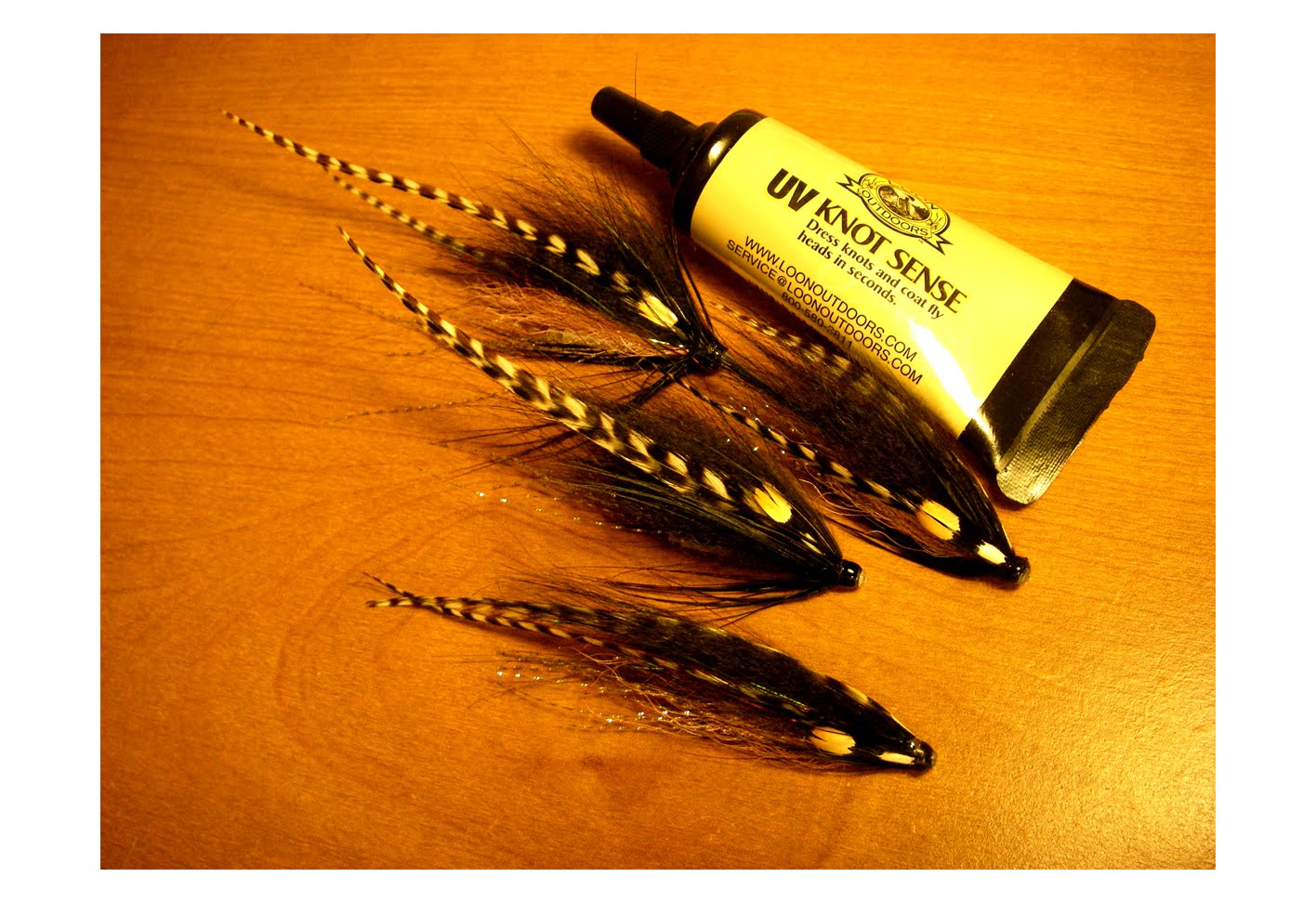
I enjoy tying flies and fish them. There is nothing more fun than "made up" a fly and use them to catch a fish. You might ask, if the fly is not resemble a regular food item, why fish eat them? Currently, the "field theory" from those steelhead and salmon fishermen says, it might be other motivation than food acquisition. It could be aggressions that provoked by mimic mate stealer? it could be aggressions that toward the egg stealer? or it might be just curiosity? As a behavior ecologist myself, I believe it is all possible. Some fisherman examined the stomach content have found that a lot of steelhead did not have anything in their stomach. This confirmed the previous thoughts that anadromous fish did not eat after enter the freshwater. However, some samples did recover some food items in the steelhead stomach. Some eggs, feathers and some aquatic insects... so they do eat, or at least they do "swallow" something, if we tend to call "eat" is a kind of behavior which is actively seeking food items and consume it in order to extract energy from it. So, good news to us, as soon as they swallow something, then there is still hope for fisherman to catch them, in the form of hook and line. Noted, the high percentage of empty stomachs is interesting. Those fish does not eat, or does not eat recently before they got caught. This totally make sense to me, why would you eat in the place that was poor of food item? the reason you original leave the river for... (seeking food items in the ocean is one of the explanation that some steelhead become anadromous fish species, while some steelhead remain in the poor nutrient river and remain small (trout life form)). So no eating interest, low food abundant...made up high percentage of empty stomach. However, here is question, if they happen to see some food items in front of them. do they eat it? the scenario is you are enter a class and happen to find out it is a surprising b-day party prepared. Do you going to eat the cake, even it is no where near the eating time? I don't know... maybe yes, maybe no? But will you touch it or smell it just to exam how good is this cake, if it worth a bit? What I think this later scenario is more likely in steelhead... the touch and feel it bit light bite "short strike". I have seen a lot of bass doing this short strike when examing the potential food items. That is the place olfactory cue and textile cue come together... I am guess steelhead and other salmonids are doing the same... ever wonder the experienced steelheader tell you to put the trailing hook all the way to the tail of the fly? because there are going to have a lot of short strike if you don't do so. (to be continue...)
Subscribe to:
Posts (Atom)